Living in Bocas del Toro, Panama: islands, costs, safety and real estate
See what Caribbean island life in Panama costs, which island fits you, and what to know about rain, healthcare and land titles before you commit.
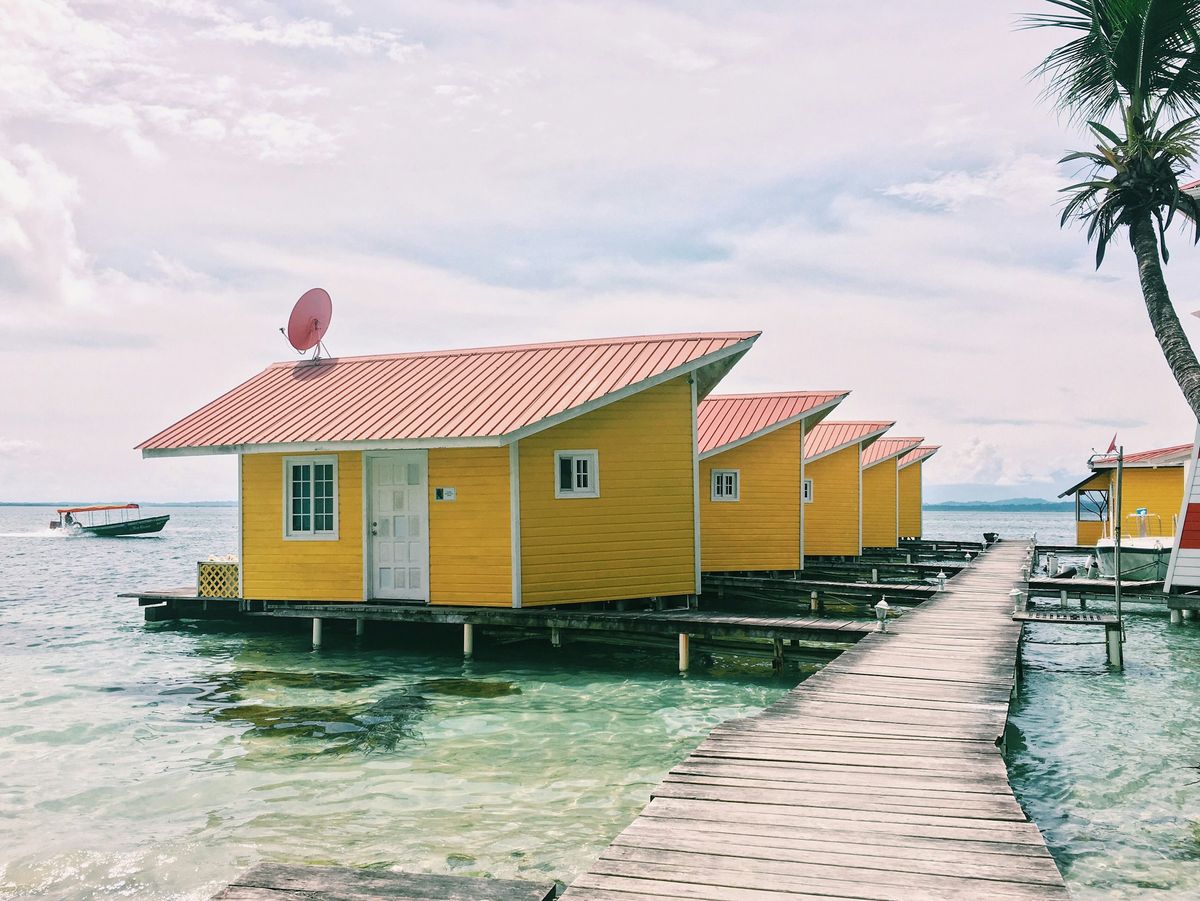
Living in Bocas del Toro means warm Caribbean water, wooden houses over the sea and a slow, sociable island life where the boat replaces the car. It suits self-reliant people in good health who want that life and accept heavy rain, basic healthcare and higher prices for anything that arrives by boat.
Bocas del Toro at a glance
| Where | A group of Caribbean islands and a mainland province in Panama’s northwest, near the Costa Rican border |
| Climate | Warm and humid; highs in the mid 80s°F (29 to 31°C); rain in every month |
| Elevation | Sea level |
| Nearest international airport | Tocumen in Panama City. The small airport on Isla Colón has flights to the capital, about one hour |
| Hospital access | A small public hospital and clinics on Isla Colón; a larger public hospital in Changuinola on the mainland; private hospitals in David or Panama City |
| Estimated rent | $600 to $1,400 a month for a one- or two-bedroom home |
| Foreign community | Small and international: North Americans and Europeans, many running tourism businesses, and younger on average than in Boquete or Coronado |
| Spanish | Useful everywhere. English is common in Bocas Town, where many Afro-Caribbean families also speak an English-based creole |
Most searches for Bocas del Toro are from vacationers. The questions movers ask are about real estate, safety, weather and cost, and this page covers those.
Who it suits
| Suits | Less suited to |
|---|---|
| People who want island life, boats, surf and diving | Anyone with a health condition that needs regular specialist care |
| Owners of small tourism businesses | People who want dry-season sunshine for months at a time |
| Remote workers who can live with patchy power and internet | People who want large supermarkets, malls and a car |
| People happy with a small, informal community | Buyers who want straightforward titled property |
The islands and towns
| Place | What it is like |
|---|---|
| Bocas Town, Isla Colón | The provincial capital and the only real town: the airport, shops, banks, restaurants, the hospital and most rentals. Busy and noisy in high season |
| The rest of Isla Colón | A road runs to surf beaches and quieter areas north of town. Houses in the jungle and on the shore, reached by car, bicycle or taxi |
| Isla Carenero | A few minutes from town by water taxi. Small, with no cars |
| Isla Bastimentos | The village of Old Bank, long beaches and a national marine park. Quieter, with footpaths and boats in place of roads |
| Isla Solarte, Isla Cristóbal and the outer islands | Scattered houses that are often off the grid, with solar power, rainwater and your own boat |
| Almirante and Changuinola | Mainland towns. Almirante is the port for the islands. Changuinola is a banana-growing town with bigger stores and the larger hospital |
Weather
There is no reliable dry season. Rain can fall in any month, often in heavy bursts with sun between them, and annual totals are among the highest in Panama. The drier spells usually come around February to March and September to October. Temperatures change little through the year. Humidity is constant, so wood, metal and electronics wear out quickly. Bocas del Toro lies south of the usual hurricane tracks.
What it costs
Rents are estimates in US dollars for a long-term lease. Check current listings before you rely on them.
| Home | Estimated monthly rent |
|---|---|
| One-bedroom apartment in Bocas Town | $600 to $1,000 |
| Two-bedroom house on Isla Colón or Carenero | $900 to $1,400 |
| Waterfront house, or a house on an outer island | $1,200 to $2,500 or more |
As an estimate, a couple spends $1,900 to $3,000 a month. Groceries, fuel and building materials cost more than on the mainland because of shipping. Electricity is expensive, and air conditioning adds to it quickly. If you live outside town, budget for a boat, fuel and maintenance, or for regular water taxis. Many owners rent to vacationers in high season, so one-year leases take some searching. See the cost of living in Panama.
Healthcare
This is the main limitation. Isla Colón has a small public hospital, clinics and pharmacies for routine and urgent care, and Changuinola has a larger public hospital. For private hospital care people go to David, about four hours from Almirante by road, or fly to Panama City. Flights don’t run at night, and bad weather can delay boats. Ask insurers about medical evacuation coverage, and see healthcare in Panama.
Many residents drink bottled or filtered water, and homes outside town often collect rainwater.
Getting there and around
- By air. Small planes fly between Isla Colón and Panama City’s domestic airport at Albrook in about an hour. Schedules are limited and fares are higher than the bus.
- By road and boat. Drive or take a bus to Almirante, then a water taxi of about 30 minutes. A car ferry also runs to Isla Colón. From Panama City the road trip takes around ten hours. From David it takes about four.
- Costa Rica. The border crossing at Guabito and Sixaola is about an hour from Almirante.
- Locally. Water taxis link the islands. In Bocas Town people walk or cycle.
Safety
Violent crime against residents is uncommon. Petty theft is frequent, empty houses get broken into, and robberies have happened on isolated beaches and trails. Lock up, don’t leave things on the beach, and avoid lonely stretches alone. Take boats seriously: wear a life jacket, and avoid crossings at night. Some beaches have strong rip currents. Road blockades during protests on the mainland have at times cut fuel and food deliveries to the islands, so keep a reserve of medicine and basics. See is Panama safe.
Bocas del Toro real estate
Much island land is held under rights of possession: a recognized right to occupy, with no registered title. It is cheaper and riskier. Ownership is harder to prove, banks won’t lend against it, and it doesn’t count toward a residency visa. Titled property exists, mainly in and around Bocas Town and in some developments. Houses built over the water sit on a government concession, not on owned land. Have your own attorney check the title or the possession history before you pay a deposit, and read buying property in Panama.
Downsides
- Rain, for days at a stretch in some months.
- Limited healthcare, and an evacuation that depends on daylight and weather.
- Power, water and internet interruptions. Many homes have a water tank and a backup power source.
- Prices for goods that come by boat.
- Insects. Sand flies and mosquitoes are a daily fact.
- Tourism. Bocas Town is loud in high season, and many neighbors are short-term visitors.
- Land title, as described above.
How people usually start
- Visit twice, once in a wet month.
- Rent for six to twelve months, in town first, before trying an outer island. A local real estate agent can help with long-term rentals.
- Price health insurance with evacuation coverage before deciding.
- Check your residency route. Retirees usually use the Pensionado visa.
For a place with hospitals close by, compare Boquete and David, which are the nearest by road. For a drier beach near the capital, see Coronado. All the areas are compared in the best places to live in Panama.
Common questions
Is Bocas del Toro safe?
Bocas del Toro is generally safe for residents who take ordinary care. The common problems in Bocas del Toro are petty theft, break-ins at empty houses and occasional robberies on isolated beaches and trails. Boats and strong surf also cause accidents, so water safety matters as much as crime.
Can foreigners buy real estate in Bocas del Toro?
Yes. Foreigners can buy real estate in Bocas del Toro, but much of the land on the islands is held under rights of possession instead of registered title. Titled property in Bocas del Toro costs more and is safer to buy, and any purchase needs a title search by your own attorney.
What is the weather like in Bocas del Toro?
Bocas del Toro is warm and humid all year, with daytime highs in the mid 80s Fahrenheit (about 29 to 31°C), and it rains in every month. The drier spells in Bocas del Toro usually fall around February to March and September to October, which differs from Panama's Pacific side.
What is the cost of living in Bocas del Toro?
As an estimate, a couple living in Bocas del Toro spends $1,900 to $3,000 a month, including rent of roughly $600 to $1,400 for a one- or two-bedroom home. Groceries, fuel and building materials cost more in Bocas del Toro than on the mainland because they arrive by boat.
Sources
This page is general information, not professional advice. Rules and amounts change, and officials apply them differently. Confirm the details with the relevant authority or a qualified professional before you act on them.