Banking in Panama: how Americans open a bank account
Know which documents to bring, how long an account takes to open, and how to move money between your US and Panamanian banks.
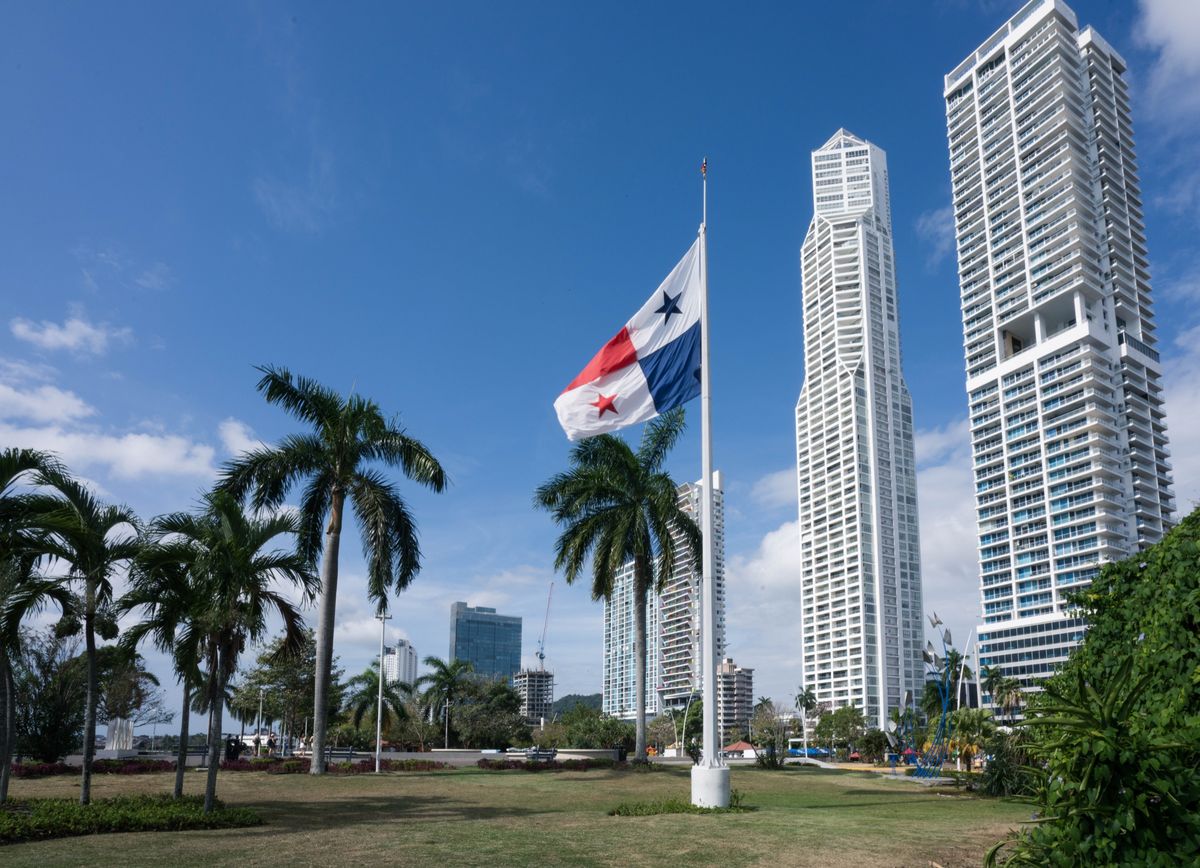
Americans can open a bank account in Panama, and accounts are held in US dollars. Banks are careful about who they take on, so expect to apply in person with reference letters and proof of income, and allow from a week to more than a month.
What a bank usually asks for
Every bank sets its own list, and it changes. Ask the branch for the current one before you travel. A typical file looks like this:
| Document | Notes |
|---|---|
| Passport | The original, with your entry stamp |
| A second photo ID | A US driver’s license usually works |
| Proof of a tie to Panama | A resident card, a letter from your attorney showing a residency application in process, a lease or a property contract |
| Bank reference letter | From your US bank, on letterhead, recent, stating how long you have been a customer. Some banks ask for two |
| Proof of income and source of funds | Tax returns, a Social Security or pension award letter, pay stubs, or the sale contract for a home |
| Proof of address | A recent utility bill or lease, from the US or Panama |
| Personal or professional reference | Sometimes requested, often from an attorney or accountant |
| US tax forms | A W-9 and a form consenting to US reporting |
| Opening deposit | Varies by bank and account type, from a few hundred dollars to several thousand |
Documents in English are often accepted as they are. Some banks want translations.
The steps
- Collect the letters in the US. Reference letters must be originals and recent, usually dated within the last one to three months. This is the step people most often get wrong.
- Choose a bank and branch. Ask your attorney or neighbors which banks are currently opening accounts for foreigners, and which branch has English-speaking staff.
- Apply in person. An officer interviews you about your work history, income and what you will use the account for.
- Wait for compliance. A separate department reviews the file and may ask for more documents.
- Fund the account and set up online banking, a debit card and, if you want one, a checkbook.
Many immigration attorneys introduce clients to a banker as part of a residency application. That can shorten the process considerably, because the bank already knows the firm. See Panama immigration attorneys.
Residents and non-residents
It is easiest once you hold a resident card or have an application in process. Some banks open personal accounts for non-residents, usually with a larger opening deposit and more questions. Others have stopped. Accounts for Panamanian corporations and foundations face the closest review.
If you are applying for the Friendly Nations visa through a fixed-term deposit, or the Qualified Investor visa, the account is part of the application, and your attorney coordinates it with the bank.
Panama’s banks
Panama is a regional banking center, with several dozen licensed banks supervised by the Superintendency of Banks. They fall into three groups:
- Large Panamanian banks with branches and ATMs across the country, such as Banco General, Banistmo, Global Bank and Multibank.
- State-owned banks, Banco Nacional de Panamá and Caja de Ahorros, which have the widest reach in small towns.
- Regional and international banks with operations in Panama, such as BAC.
We don’t rank them. What matters is which one will open your account, has a branch near where you will live and offers online banking you can use. The Superintendency publishes the list of licensed banks. Bank ownership changes, so check that list for current names.
Why banks ask so many questions
Panama spent years under pressure from international bodies over money laundering and tax evasion, and its banks now apply strict know-your-customer rules. US citizens bring an extra layer. Under a US law known as FATCA, Panamanian banks report accounts held by Americans to the IRS, and some banks limit the services they offer US customers for that reason. None of this stops an ordinary retiree with documented income. It does mean paperwork.
Using the account
- Currency. Everything is in dollars. Prices appear as “B/.” for balboas, which means the same amount in dollars.
- ATMs. They are common in towns and malls and dispense US bills. A US debit card works, with fees from both banks and a withdrawal limit per transaction.
- Local payments. Transfers between Panamanian banks are cheap and usually arrive within a day. A phone payment app from the largest bank is used everywhere, from landlords to market stalls. Rent, utilities and tradespeople are far easier to pay from a local account.
- Moving money from the US. Most people send an international wire from their US bank a few times a year, paying a fee at each end. Large or unusual wires can prompt the Panamanian bank to ask for supporting documents.
- Checks. A US check deposited in Panama can take weeks to clear.
- Credit. Local credit cards and mortgages are available to some foreign residents, with more paperwork and age limits on loans.
Keep your US accounts
Keep a US bank account, a US credit card and a US mailing address your bank will accept. Most retirees have Social Security paid into the US account and move money down as needed. Tell your US bank you are moving, so that overseas logins and wires don’t trigger a freeze. The Federal Benefits Unit at the US Embassy handles Social Security questions for people living in Panama.
What you report to the US
- FBAR. If your non-US accounts together exceed $10,000 at any point in the year, you file a foreign account report with the US Treasury. A fixed-term deposit made for a visa counts.
- Form 8938. Larger balances are also reported on a form filed with your tax return. The thresholds are higher for people who live abroad.
- Interest. Interest on Panamanian savings and fixed-term deposits is generally exempt from Panamanian tax and taxable in the US.
Penalties for missing these reports are heavy, even when no tax is owed. See taxes in Panama, or ask a preparer who works with Americans abroad.
Before you travel
- Ask your US bank for two original reference letters.
- Bring your last two tax returns and your pension or Social Security award letter.
- Ask your attorney which banks they work with.
- Plan to be in Panama for at least a week for the application, and expect a follow-up visit.
See the steps for moving to Panama for where banking fits in the order of a move.
Common questions
Can a US citizen open a bank account in Panama?
Yes. A US citizen can open a bank account in Panama, but banks are selective. Most want to see a tie to the country, such as a resident card, a residency application in process or a property purchase, along with reference letters and proof of where your money comes from. Expect to apply in person.
Does Panama use US dollars?
Yes. Panama uses the US dollar for all paper money. Its own currency, the balboa, is fixed at one to one with the dollar and exists only as coins, which circulate alongside US coins. Bank accounts in Panama are held in dollars.
How long does it take to open a bank account in Panama?
Opening a bank account in Panama commonly takes from one week to more than a month after you hand in a complete file. The bank's compliance department reviews your documents and may come back with questions. Missing papers are the usual cause of delay.
Are bank deposits in Panama insured?
Bank deposits in Panama have not been covered by a government deposit insurance scheme like the FDIC in the US. Banks are licensed and supervised by the Superintendency of Banks. Many residents keep only what they need in Panama and leave the rest in US accounts.
Sources
This page is general information, not professional advice. Rules and amounts change, and officials apply them differently. Confirm the details with the relevant authority or a qualified professional before you act on them.